
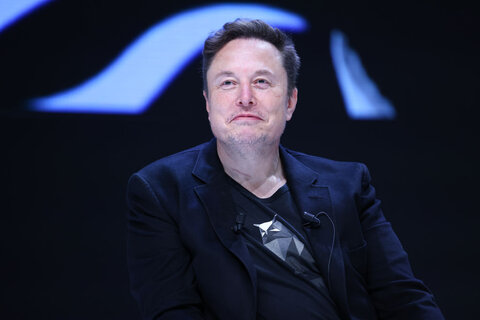
Judge Tosses Elon Musk’s Antitrust Suit Against Departing X Advertisers
For some time, Elon Musk and his allies in government have waged a legal campaign trying to shut down advertising boycotts of Musk’s X/Twitter social media platform by groups and companies averse to some of the political content found there. Now, a federal court in Texas has thrown out X’s suit claiming that advertisers and an industry group violated antitrust law by pulling back from buying ads on the site and by exchanging information on related matters. There remains very much open—and the subject of a recent Cato Institute amicus brief—the question of how and when the First Amendment may restrict government agencies from joining efforts to crush ad boycotts with an ideological dimension.
In the antitrust suit, X Corporation, which operates the social media site, had sued several major advertisers, including Mars, Colgate-Palmolive, Shell, CVS Health, and Lego, which had either reduced or zeroed out their ad commitments on the former Twitter, along with an international industry group by the name of the World Federation of Advertisers. On March 26, Senior US District Judge Jane Boyle of the Northern District of Texas dismissed the suit as failing to state an antitrust injury. The logic was very much along lines I suggested when I wrote about the suit last year: there was essentially no showing that anyone was benefiting improperly from the advertisers’ decision to loosen or cut ties to X, no injury to consumers, and no use of economic leverage to pursue a goal held suspect under antitrust law, such as a holdout’s participation in a cartel.
Judge Boyle avoided addressing the free expression implications, but judges in other proceedings have done so. Investigations of Media Matters launched by Texas Attorney General Ken Paxton and then-Missouri Attorney General Andrew Bailey ran into injunctions, based in part on findings of illegitimate retaliatory intent, and Missouri dropped its action. Most prominently, the Federal Trade Commission under Chair Andrew Ferguson launched its own investigation of Media Matters, which has also fared poorly in court. On February 26, Cato filed an amicus brief in the DC Circuit Court of Appeals arguing for affirming a district court’s ruling for Media Matters: “When federal agencies attempt to chill speech and dilute the Constitution’s guarantees, they should face consequences.”
For more on these cases, check out a discussion presented by TechFreedom at Georgetown Law on March 30 with an all-Cato panel of senior legal fellow Dan Greenberg, policy analyst Solveig Singleton, and adjunct scholar (and distinguished First Amendment lawyer) Robert Corn-Revere. You can watch here.