
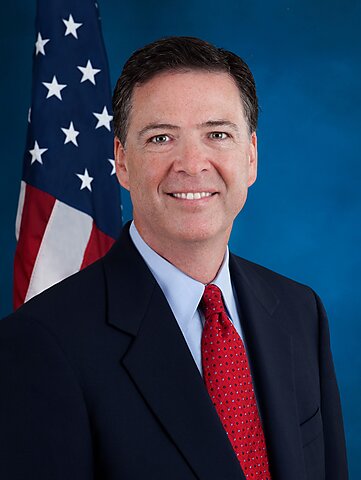
The federal indictment against former FBI Director James Comey has ventured into the realm of legal parody. By asserting that seashells arranged on a beach qualify as true threats, the government has constructed a theory that is destined to collide with the First Amendment. (Comey is charged with making threats to harm President Trump.)
It is highly probable that US District Judge Louise Wood Flanagan will dismiss the indictment long before the matter ever reaches a jury. In fact, given the absurdity of the charges, Judge Flanagan may find the prosecution sufficiently vexatious to trigger the Hyde Amendment, potentially forcing the government to foot Comey’s legal bills.
This aggressive posturing appears to be a calculated audition by Acting Attorney General Todd Blanche. In an effort to shed the “acting” from his title, Blanche knows that he must succeed where his predecessor, Pam Bondi, failed. Accordingly, Blanche is signaling a Department of Justice fully untethered from constitutional restraints and evidentiary standards. By prioritizing the president’s partisan political agenda over the rule of law, the DOJ is demonstrating a chilling willingness to weaponize the legal system against perceived enemies, regardless of the merits.
While I often highlight the historic conception of the criminal jury as an injustice preventing institution—tasked with shutting down prosecutions as vindictive as this one—this case exposes a more systemic pathology: the total lack of accountability for prosecutors. When frivolous or politically motivated charges are brought, the prosecutors behind them face no personal or professional consequences. This lack of skin in the game empowers prosecutors to ignore the spirit of the law, confident that even a high-profile failure carries no real penalty.
We recently witnessed the tragic killings of Rene Good and Alex Pretti by federal agents who, under current Supreme Court precedent, cannot be sued for their actions due to the absence of a specific federal statute. However, federal prosecutors enjoy even greater legal protection. Through the judicially confected doctrine of absolute prosecutorial immunity, the courthouse doors are effectively locked against those seeking redress against actions taken by prosecutors.
As long as a prosecutor is acting within their role as a courtroom advocate, they are shielded from civil liability, regardless of the merit—or the malice—behind their decisions. If a prosecutor like Matthew Petracca—who is leading the effort to prosecute Comey—could be held personally liable for his actions, the decision to launch a vindictive prosecution in furtherance of President Trump’s political vendetta would carry a heavy personal cost. Instead, the current system ensures that prosecutors remain the most powerful and least accountable actors in our criminal justice system.
This lack of accountability is further cemented by the Department of Justice’s internal culture—an environment rife with opacity. My colleague Matthew Cavedon and I recently filed a comment explaining how federal prosecutors are shielded from accountability. The current status quo is to defer to the DOJ’s Office of Professional Responsibility (OPR).
In practice, the OPR functions as a veritable graveyard where allegations of prosecutorial misconduct go to die, allowing offenders to remain unidentified and their careers to proceed unscathed. Rather than fix this, the DOJ is currently attempting to codify this longstanding self-policing practice into official policy. This widens the accountability gap—authorizing the watchers to watch themselves, leaving the public in the dark.
The current trajectory of the Department of Justice suggests a dangerous shift toward placing political allegiance over the rule of law. When prosecutors are weaponized to target political opponents, they do so with the serene knowledge that they face zero personal or professional risk.
The remedy for this imbalance lies squarely with Congress, which possesses the unique authority to re-establish oversight. This begins with the power of the purse, through which Congress can and should slash funding to departments that engage in such obvious overreach. Even more crucially, Congress has the authority to create a statutory right of action that authorizes suits for civil damages against federal officials. But that’s not enough: Congress must also expressly abrogate judicially created immunity doctrines, including the absolute immunity prosecutors currently enjoy.
Accountability only truly exists when those in power are forced to justify their actions to a jury composed of ordinary Americans. Until the law changes, prosecutors will continue to wield the coercive power of the state without fear of the consequences, and ridiculous cases like the Comey seashell indictment stand to become the rule rather than the exception.