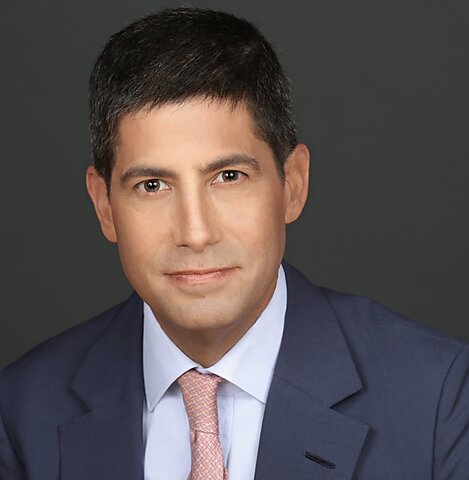
New Fed Chairman Kevin Warsh testified before the House Financial Services Committee and the Senate Banking Committee last week, delivering the Fed’s semiannual Monetary Policy Report. Both sessions covered important topics: a favorable June inflation report that Warsh declined to treat as “mission accomplished,” the Fed’s retreat from forward guidance, and pointed exchanges over the Fed’s independence from the White House. But an outsized share of the questioning, especially in the Senate, went to artificial intelligence (AI), leaving some key questions about the state of monetary policy unasked.
Obviously, the Fed has no direct control over how AI evolves. But senators pressed Warsh on whether the AI investment boom is inflationary and on the financial-stability risks posed by the newest AI models. His answer was that AI-driven price increases need not be inflationary, because supply should eventually catch up, and he described the internal Fed debate over AI spending as “one of the good family fights.”
The debate over the potential productivity gains from AI is important, but it is a poor use of scarce oversight time. Credible estimates of AI’s productivity effect span an order of magnitude, from modest gains over a decade to sharp annual ones, and no near-term policy can be anchored to a number that uncertain. And if any financial stability problems arise due to AI, the Fed will surely have to respond, but such outcomes are highly speculative at this time. But a congressional hearing is also a rare, real-time chance to pin down the Fed on specifics and gain clarity on broader macroeconomic and monetary policy-related issues directly in the Fed’s purview.
Fortunately, the hearings did offer examples of such fruitful discussion. When Rep. Barry Loudermilk (R‑GA) pressed Warsh on whether the Fed’s role as a ready buyer of Treasury securities has helped enable larger federal deficits, the chairman engaged the substance directly, acknowledging the tension between fiscal and monetary policy and pointing to his new balance-sheet task force. Agree with the answer or not, the exchange was concrete and revealing—the balance sheet task force was going to investigate fiscal-monetary interactions.
Still, too many questions with immediate stakes got only glancing attention. At his first Federal Open Market Committee (FOMC) meeting in June, Warsh launched five task forces to review the Fed’s core functions, and the inflation-framework review is expected to take months to complete. Inflation is still well above target today, and the near-term plan to bring it back to 2 percent is vague. The same is true of the Fed’s read on a labor market sending mixed signals, its exposure to a volatile energy shock, and the operating losses it could face if rates rise. Each is a live issue with a knowable answer, but such questions were never asked.
Here are four questions that would have made the hearings more useful. They are worth asking Chairman Warsh as soon as possible.
You have launched a task force to review the Fed’s inflation framework, a worthwhile effort that will nonetheless take months to report. In the meantime, inflation remains well above the Fed’s 2 percent target, and households continue to struggle with affordability. How does the Fed plan to bring inflation down in the near term?
The labor market is sending mixed signals. Job growth has stagnated, yet the unemployment rate, the Fed’s preferred gauge, has held flat, largely because workers have left the labor force and stopped looking for work. How does the Fed assess the labor market’s underlying health, and how does it weigh the risks to employment against the many risks to inflation?
The war in Iran remains unresolved. Cease-fires have repeatedly collapsed, and the range of possible outcomes is wide. How much does this uncertainty complicate the Fed’s pursuit of price stability, and does the Fed have concrete contingency plans for the war’s potential outcomes? If so, could you describe them?
None of the task forces addresses interest on reserves (IOR). Several FOMC members expect rate increases later this year, and persistent inflation pressure could push rates higher still. If the Fed raises its target, it will pay banks even more in interest on their reserves. Would that return the Fed to the operating losses it recorded in 2023 and 2024, and what is the plan to avoid them?
The best chance to question the new Fed chairman before the Fed shifts its policy rate came and went. Congress will not hold another hearing like this for months. The Fed will make several monetary policy decisions before then, with these questions unanswered. That is the real cost of spending the hearings on trendy topics like artificial intelligence, while the issues that will shape policy this year went somewhat underexamined. But all is not lost—the press can raise these questions to Warsh following the next FOMC meeting on July 29.