
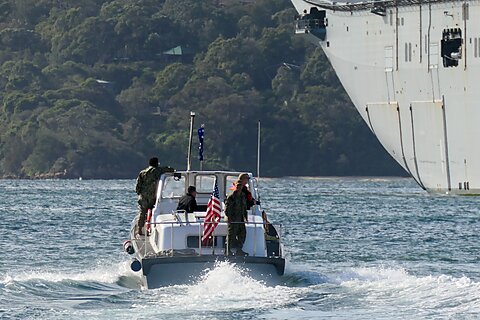
Since September 2025, the US military has been targeting small boats in the Caribbean and eastern Pacific Ocean, claiming they carry drugs. Branded by the Pentagon as “Operation Southern Spear,” 79 strikes have been carried out and 238 people have died, as of October 2026.
Officially, the Trump administration has designated the cartels and groups transporting drugs as Foreign Terrorist Organizations, justifying the use of military spending and artillery. Further, President Trump has claimed twice that seaborne drug flow has decreased 97 percent.
Recently, however, Wall Street Journal South American Bureau Chief Juan Forero reported that in response to the US airstrikes, smugglers are learning how to evade the military. As a result, new routes have led to record high supply, decreasing prices, and rising purity in both the US and Europe.
According to Forero, Colombian army official Edilberto Cortés said that the Amazon and its sprawling river network have become increasingly popular for smugglers as a direct response to the US attacks.
This is unsurprising. Demand for drugs tends to be inelastic, so prohibiting supply only raises prices and profits and invites new entrants. Enforcement and targeting make the trade more expensive and violent, not smaller as intended and claimed.
This is a pattern. In the 1980s, Caribbean interdiction pushed cocaine through Mexico. Over a decade later, Plan Colombia—a joint US-Colombian initiative intended to prevent drugs and fight cartels—pushed coca cultivation back into Peru and Bolivia. When Mexico targeted cartel leaders in 2006, the organizations split up into rival factions without shrinking the industry. Over decades, it’s the same story every time.
Felipe Botero, a researcher for the Global Initiative Against Transnational Organized Crime, suggests that Trump’s policy is “more about visibility and narrative—showing decisive action—than one that genuinely disrupts organized crime.”
Drug prohibitions and military targeting are clearly ineffective. Pushing down on one spot means it comes up somewhere else.
Cross-posted from Substack.