
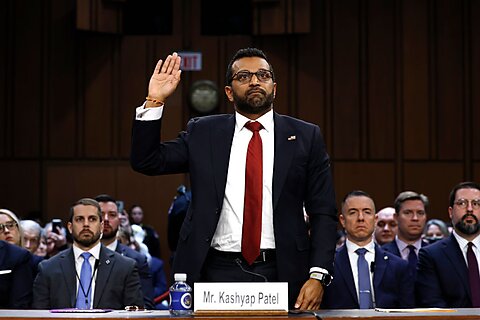
Earlier this month, The Atlantic published “The FBI Director Is MIA,” an article that accused Kash Patel of excessive drinking, various management failures, and episodes of erratic behavior. Last week, Patel responded with a defamation complaint calling for $250,000,000 in damages. Some spectators found the gossipy, scandalous aspects of the article—which Patel, in order to bring suit, had to recite a second time—to be fascinating. But what is more fascinating is what Patel’s lawsuit reveals about the state of defamation law today. Patel won’t win: here’s why.
The Basics of Defamation Law
Attorneys who handle defamation suits know what the public does not: Defamation actions involving public figures aren’t really about whether what was said was true or false. Instead, for roughly the last 60 years, these lawsuits have been about what New York Times vs. Sullivan called actual malice.
Most civil actions must only show a relation between a plaintiff’s injuries and a defendant’s action—in other words, you did this, therefore I suffered that. But the law of public-figure defamation has very different requirements. Proof of defamation against public figures requires proof of actual malice – and to establish actual malice, the plaintiff must show either that (1) the defendant actually knew that some allegedly defamatory statement was false or (2) that the defendant made the allegedly defamatory statement with reckless disregard of its truth or falsity. Notably, both conditions require proof of what the defendant actually thought.
Actual malice cannot be shown just by demonstrating that a reasonable person would suspect that some statement is false; arguments about what a reasonable person would probably know are generally insufficient to demonstrate what some particular person actually did know. Similarly, a plaintiff who attempts to prove reckless disregard must show that the defendant actually entertained serious doubts about the truth of some statement, or that the defendant actually had a high degree of awareness of some statement’s probable falsity.
The upshot of all this is that defamation actions necessarily require proof of a defendant’s actual, subjective state of mind. When I produced a documentary about modern defamation law, I tried to explain this special requirement of defamation law with two graphic symbols: a skull and crossbones (for intentional falsehoods) and a self-imposed blindfold (for reckless disregard). Unless you can prove intentional deception or reckless disregard of the truth, you can’t prove defamation of a public figure.
The Patel Complaint
Kash Patel’s complaint contains nine separate attempts to demonstrate that actual malice drove The Atlantic’s article. However, it is very likely that none of these nine arguments can even make it out of the starting gate. They are summarized in boldface just below:
Defendants were “expressly warned” that “the central claims were false,” but they ignored those warnings. In this defamation action, that doesn’t matter. Journalists who receive warnings about falsity are entitled to ignore them. People who receive warnings sometimes disbelieve them in good faith; to prove defamation, plaintiff would have to prove that defendant didn’t disbelieve those warnings. The plaintiff who argues that it’s just unreasonable not to believe such warnings will be unsuccessful; to repeat, the law doesn’t require journalists to behave reasonably.
Patel was only given a “two-hour comment window” to respond to the pending article’s claims. The law doesn’t require journalists to give the subjects of their stories any opportunity for responsive comments at all. As a matter of morality, perhaps the subjects of such stories should receive a reasonable opportunity to respond; as a matter of law, there is no such requirement for journalists to provide it.
Defendants relied “exclusively on anonymous sources” and lacked “credible firsthand knowledge.” When the goal is to prove defamation, complaints about poor sourcing won’t work. Journalists are entitled to rely on their own judgment and believe whoever they want to – as long as they actually behave in good faith. To prove defamation, plaintiffs would have to show that the defendants actually had doubts about the truth of what their sources told them or that they actually had a high degree of awareness of their claims’ probable falsity.
Defendants failed to “take even the most basic investigative steps” to disconfirm their claims. Once again: such claims imply that proof of reasonable, non-negligent journalistic behavior is central to defamation litigation. And that just isn’t so: under the law, there is no obligation at all for the journalist to investigate the truth of the story that is produced. Defendants are entitled to believe the account that they decide, in good faith, to believe: Just as you have no duty under the law to pay attention to warnings from others about alleged falsehoods involving public figures, you have no duty under the law to investigate the truth of what you say about public figures. Unless the plaintiff can show that defendants actually entertained doubts about what they were writing — or that they actually and intentionally overlooked its probable falsity — defendants are in the clear.
Defendants violated their internal policies regarding editorial review. As a general matter, there is no requirement for journalists to have editorial review policies at all. The fact that such policies are intermittently rejected or obeyed might demonstrate imprudence – that is, it might lead a third party to draw conclusions about unreasonableness or negligence – but it won’t demonstrate the actual malice that is required for defamation.
Defendants ignored “a substantial public record of Director Patel’s operational successes that was fundamentally inconsistent with their thesis.” This is almost certainly irrelevant to a defamation claim. Perhaps it is possible that defendants ignored public records demonstrating that the article they produced was flatly or logically impossible. That would be excellent evidence of negligence (which is, again, irrelevant), because it would lead to the inference that defendants carelessly overlooked disconfirming evidence that would overturn their factual claims. But plaintiffs’ accusation that defendants overlooked a record of success that was “fundamentally inconsistent with their thesis” is a claim that is essentially empty.
Defendants knew that claims similar to theirs were already being litigated. Perhaps it’s true that defendants knew this, but that doesn’t show what would have to be shown to prove defamation. When people learn about a lawsuit, they don’t learn anything about whether the claims being adjudicated in it are groundless or meritorious.
Defendants have demonstrated “clear editorial animus” toward Patel. Defamation litigants regularly accuse defendants of animus or bias – which is a fancy way of saying “They don’t like me!” But claims about animus do not help the defamation litigant; it is important not to confuse claims that rest on the everyday understanding of malice with the very different legal concept that Sullivan labels actual malice. The everyday understanding of malice – spite – is quite different from actual malice; journalists regularly write about people they don’t personally like. The demonstration of animus does not prove anything about what’s needed for actual malice – a showing of defendants’ beliefs, doubts, or suspicions about the truth or falsity of their claims.
Some of defendants’ allegations were “inherently implausible.” That, by itself, isn’t evidence of defamation. Sometimes implausible things happen, and sometimes journalists then publish stories about those things: That’s almost the definition of news. Again, it’s arguably careless to publish implausible allegations – but accusations about carelessness cannot demonstrate the bad faith that is required to prove defamation liability.
Many of these arguments are peppered throughout the brief as well: the leitmotif of a negligence claim occurs over and over again. The complaint alleges that the article’s author published “implausible” allegations; that the author knew her sources were “highly partisan”; that the author’s investigation “was grossly deficient – and deliberately so”; and that the author made a “conscious decision to ignore the detailed, specific, and substantive refutations” provided by the FBI. Again, these may well be damning criticisms of the defendant’s professional ethics, but they have little or nothing to do with actual malice.
In fairness, it is conceivable that a few of the bullet-pointed arguments above could lead to discovery of actual malice. The brief claims that the defendants “relied exclusively on anonymous sources with known motives to fabricate or exaggerate”; perhaps this investigative procedure threw up so many red flags that could not reasonably be ignored that defendants’ decision to ignore them could serve as evidence of actual malice. Similarly, perhaps the set of allegations against Patel, when compiled together, are so collectively implausible that it’s unimaginable that the defendant would believe them in good faith – if so, that could be evidence of actual malice. These arguments aren’t sure losers—they’re just very likely losers.
Actual Malice in Practice
The Supreme Court has not disarmed defamation plaintiffs completely, and the defendant who invokes his or her own good faith cannot necessarily use it as a get-out-of-defamation-free card. But it’s close. Supreme Court case law after Sullivan provides a few cramped avenues, briefly alluded to in the previous paragraph, that allow the use of circumstantial evidence to prove actual malice. Under St. Amant v. Thompson, the defamation plaintiff can prevail if the allegations at issue are so inherently improbable that only a reckless person would circulate them. Under Harte-Hanks Communications, Inc. v. Connaughton, the defamation plaintiff can prevail by showing that the defendant encountered so many warning signs that he or she must have known that the developing narrative was defective or that he or she must have ignored the multitude of clear signals to that effect. The plaintiff is not confined to these kinds of arguments, of course; the plaintiff might discover some avenue of inquiry that rests on contemporaneous conversations or records that demonstrate that the defendant in fact entertained doubts about the accuracy of some developing storyline. But such avenues typically won’t take the defamation plaintiff very far: That is because these prospects typically amount to convincing the court that a defendant’s protestations of good faith are lies, which is typically an insurmountable burden. In other words, of course, there are exceptions, but the rule is that the defendant is practically invulnerable.
The Big Picture of Defamation Law Today
The Patel complaint is a kind of snapshot of the problems of defamation law today.
As compared to other kinds of actions, it’s very hard for public figures to win defamation suits, because it’s very hard to demonstrate the mental bad-faith perspective that a victorious defamation suit requires. The modern law of defamation makes it inevitable that many people will be defamed without any remedy — because the hurdle of proof they face is so high that defamation can never be proven. That’s what the Supreme Court said in Gertz v. Robert Welch, when it wrote: “Plainly many deserving plaintiffs, including some intentionally subjected to injury, will be unable to surmount the barrier of the New York Times test.” That means that many victims of defamation have nowhere to go to get their reputation back. According to the Supreme Court, those social costs must be borne to avoid what Gertz called “media self-censorship.”
Lots of smart people defend the status quo of defamation law, largely because the unique barriers to liability this area of law creates provide extremely strong protections for free expression. The defenders of the status quo argue that journalists have market incentives to publish accurate stories in order to preserve their brand’s reputation for accuracy. But that argument is weak, because journalists are also faced with other incentives that push them in other directions – for instance, journalists also have powerful market incentives to publish sensational stories.
Those whose reputation is damaged by journalism will not always decide just to sit there and do nothing, even if they realize that a defamation suit will make for a steep uphill battle. Some defamation plaintiffs will pursue relief through legal action nevertheless, and some of them will even use the legal system to impose costs on others where they can. Modern defamation law does not stop public figures from exploiting the law to increase pain for their critics. The well-heeled defamation plaintiff is free to resort to performative measures that impose costs on other parties—and will not be deterred from legal action just because the chances of ultimate victory are low; in such cases, the defamation action can serve self-pleasuring purposes outside the pursuit of compensation. (This is evident, for instance, from the blustering and self-promotional sections of Patel’s complaint – and see also here. That stuff isn’t in there to persuade a judge or a jury; that stuff is in there to gratify the client.) Those who defend the Sullivan definition regime, based on the theory that it blocks low-merit and improper defamation actions, thus face a major problem: if the policy goal of the modern defamation regime is indeed to eliminate improper or low-merit lawsuits, that mission has plainly failed.
The legitimately aggrieved public-figure defamation plaintiff who wants to pursue relief must play a game with terrible odds. Not only does the plaintiff have to relive the allegations (perhaps repeatedly, because of the Streisand effect), but his or her chances of success are inordinately low — as compared to the rules of the game in just about every other category of civil action. That plaintiff does not simply have to show that his injury is rightly attributable to defendant’s actions by a preponderance of evidence; rather, in defamation cases, the plaintiff must prove, with clear and convincing evidence, what the defendant was actually thinking when or before the publication occurred. In practice, the requirements of actual malice regularly deprive the defamation litigant his or her day in court.
In short, as I have written before, American libel law is a disaster. The American civil justice system is supposed to deter misconduct and compensate the injured in a fair and efficient manner. But the modern law of defamation is an outlier. It fails at deterrence; it fails at compensation; it fails at fairness, and it fails at efficiency. Ultimately, the failures of defamation law spring from the fact that our civil justice system assigns little weight to the protection of reputation, as compared to other areas of the law that give healthy protection to liberty and property interests. I fear that this low level of protection of reputation is partly driven by some people’s view that an injury to reputation isn’t a real injury at all.
Our current law encourages defamation litigation to be something like a Kabuki dance – a fundamentally theatrical enterprise in which litigants rarely can get to the merits. Perhaps the Supreme Court will once again rewrite its own defamation rules someday, and perhaps those new rules will incorporate the conventions of fairness that are found in the rest of our civil justice system. This kind of new deal for defamation law could easily incorporate a high level of protection of freedom of expression as well as a high level of protection for reputation.
It wouldn’t surprise me if everything that The Atlantic has published about Kash Patel is true. But the problem with modern defamation law is that it doesn’t address the fundamental problem of defamation: sometimes journalists will publish reputationally-damaging things that are true, and sometimes journalists will publish reputationally-damaging things that are false. Presumably, the goal of defamation law should be to sort these matters into two separate buckets – and our modern system of defamation does a terrible job at this. Sullivan’s requirement of proof of the defendant’s bad faith creates an extraordinary and largely pointless burden for the plaintiff, and that burden is carried by all defamation plaintiffs, whether they have a strong defamation case or not. That requirement plainly fails to accomplish what is often held out to be Sullivan’s chief goal—that is, putting an end to unjustified, speech-stifling defamation lawsuits by powerful figures with money to burn. Perhaps Kash Patel is one of those figures: if so, his suit is evidence that the decisions of vindictive plaintiffs to force defendants to bear litigation costs have not been deterrred by Sullivan.
In short, Sullivan has created a significant waste of judicial and litigation resources by creating essentially unnecessary hurdles for and burdens on both plaintiffs and defendants. It has also lowered the value of journalism generally, because it has imposed a steep discount on the price of false and negligent statements that damage the reputation of public figures. A different—and better—law of defamation would allow plaintiffs and defendants to get to the merits of truth and falsity much more rapidly; furthermore, that reform would reverse Sullivan’s erosions of our rights to reputational protection.