
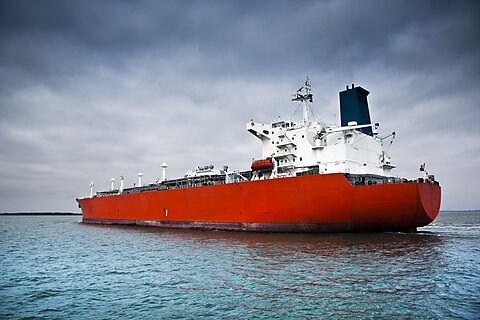
Last weekend, the tanker Paula Glory dropped anchor off Honolulu, having departed New Orleans four weeks earlier. Flagged in the Marshall Islands and riding low in the water—a sign of being fully laden—the vessel appears to be carrying fuel to Hawaii under the Jones Act waiver that took effect in March for energy and fertilizer products. If so, it will be the second foreign vessel to transport fuel to the Aloha State since March, further confirming the emergence of a domestic trade route with no precedent before the waiver.
The National Ballast Information Clearinghouse (NBIC) compiles ballast water reports that vessels must file when calling at US ports. Because that requirement applies broadly to vessels entering US waters, NBIC’s records serve as a log of vessel arrivals, including a ship’s flag and its last port of call. A review of that data for Hawaii, covering 2006 through 2025, finds no previous examples of tankers supplying fuel to the state from the Gulf Coast.
The only prior Gulf Coast-to-Honolulu call by a Jones Act-compliant tanker in that 20-year span was the Evergreen State in 2015, when the vessel was under charter to Military Sealift Command. That voyage, therefore, almost certainly involved military logistics rather than commercial fuel deliveries to Hawaii. Strip that one out, and no tanker had ever carried cargo from the Gulf Coast to Honolulu before this year. Under the waiver, meanwhile, there now appear to be two such voyages.
The nascent Hawaii route is not alone. Since the waiver took effect, several other domestic trade routes have appeared for the first time:
Bayonne, New Jersey → Puerto Rico. A foreign-flagged tanker transported fuel from Bayonne to Puerto Rico, marking the first such movement in twenty years of NBIC records. Indeed, only five voyages of Jones Act-compliant tankers from New Jersey ports to Puerto Rico appear over the past twenty years, four of which were barges. The lone movement by a self-propelled Jones Act tanker was over a decade ago, in June 2016.
San Juan, Puerto Rico → Point Comfort, Texas. In June, a Portuguese-flagged tanker carried a fertilizer input from Puerto Rico to Texas. Puerto Rico is not a meaningful supplier of bulk energy or chemical products to the US mainland, so prior tanker traffic from Puerto Rico to Texas was likely riding empty. NBIC records no previous Jones Act voyages between Puerto Rico and Point Comfort.
Morehead City, North Carolina → New Orleans, Louisiana. In late June, the dry bulk carrier Outrider transported nearly 32,000 metric tons of fertilizer input to New Orleans. NBIC data shows no previous movement of this kind, and the oceangoing Jones Act fleet has no dry bulk ships.
Garyville, Louisiana → Alaska, and Pasadena, Texas → Alaska. Foreign-flagged tankers carried fuel from Gulf Coast refineries to Alaska under the waiver, with no precedent in twenty years of NBIC data. Across all Gulf Coast ports, only a single Jones Act tanker voyage to Alaska, departing from Houston in 2019, appears in the historical record.
Marcus Hook, Pennsylvania → Puerto Rico. Two foreign-flagged liquefied petroleum gas (LPG) carriers have delivered propane to Puerto Rico via a route not recorded in the historical record, reflecting the complete lack of Jones Act-compliant LPG carriers capable of serving the trade.
Linden, New Jersey → California. In May, the tanker STI Millennia carried more than 264,000 barrels of jet fuel to three California ports. Energy Information Administration data shows no East Coast-to-West Coast waterborne shipments of jet fuel over the previous twenty years.
Suspending the Jones Act for a limited set of energy and fertilizer shipments did more than increase the volume of domestic cargo movement. It activated trade routes that the protected domestic fleet had not served—in some cases, could not have served because it lacked the necessary vessels—over the twenty years for which data are available. That’s strong evidence for the longstanding critique that the Jones Act suppresses domestic commerce by preventing economically viable trade between Americans.
The waiver is temporary and applies to a relatively short list of products. Yet even with such limits, it has been able to surface new domestic trade that the Jones Act had kept dormant. This raises the obvious question of how much more American commerce, in how many other products, and between how many more places, has been quietly stopped by this long-standing protectionist shipping law? Unless Congress acts to make relief permanent and broad, we will never find out.