
When Unlicensed IoT Meets Satellite: A New Connectivity Model or an Interference Problem?
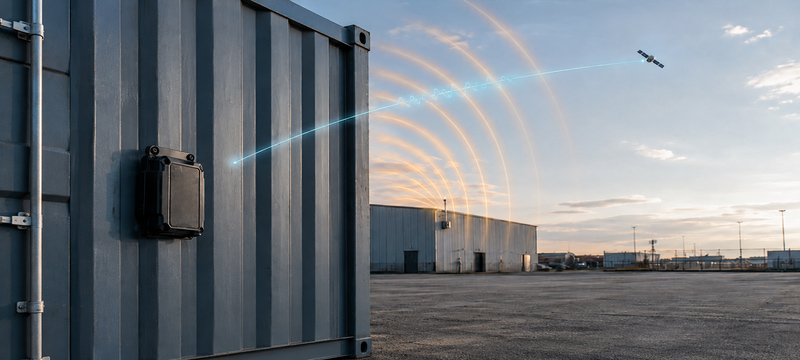
The FCC is exploring whether devices operating in spectrum used by Wi-Fi, Bluetooth and other unlicensed technologies could communicate directly with satellites. The proposal could expand IoT coverage without conventional cellular or satellite radios—but regulatory permission alone will not make ordinary devices satellite-ready.
Satellite IoT has generally required purpose-built hardware, access to licensed spectrum and a service agreement with a specialised network operator. A new US regulatory proceeding could begin to loosen that model.
On August 6, 2026, the Federal Communications Commission adopted a Notice of Proposed Rulemaking examining whether devices operating under its Part 15 unlicensed rules should be allowed to communicate with authorised satellites.
The proposal covers Earth-to-space transmissions in the 2.4 GHz and 5.8 GHz bands—more specifically, 2400–2483.5 MHz and 5725–5850 MHz. Together, they represent 208.5 MHz of spectrum already used extensively by Wi-Fi, Bluetooth and numerous proprietary IoT technologies. The FCC is also seeking input on possible satellite-to-device transmissions, particularly in the 5.8 GHz band.
This is the start of a rulemaking process, not an authorisation for commercial services. The technical conditions, licensing model and interference protections remain unresolved.
From Specialised Radio to Familiar IoT Hardware
The attraction is straightforward. Billions of consumer and industrial devices already contain radios designed to operate in unlicensed spectrum. If some could connect directly to satellites, manufacturers might extend coverage without adding a separate cellular or satellite modem.
That could be relevant to environmental sensors, agricultural equipment, remote infrastructure and asset-tracking devices that need to transmit small amounts of data from locations beyond terrestrial network coverage.
There is already evidence that the concept can work under restricted conditions. The FCC recently authorised Hubble Network satellites to receive signals from terrestrial devices operating with parameters consistent with Bluetooth Low Energy in a narrow portion of the 2.4 GHz band. The authorised terrestrial transmitters use 100 milliwatts of power, although the approval currently involves limited operation and required a waiver because the band does not have a conventional satellite allocation.
The new proceeding considers replacing such case-by-case arrangements with a broader framework. One option would be to treat compatible terrestrial devices as licensed by rule when communicating with approved satellites. Users would not need to apply individually for an earth-station licence.
This could reduce one regulatory barrier, but it does not mean every existing Wi-Fi or Bluetooth device would suddenly acquire satellite connectivity.
A Legal Path Does Not Solve the Link Budget
Part 15 rules were developed mainly for terrestrial communications. Devices in these bands typically communicate across rooms, buildings or local outdoor areas—not hundreds of kilometres to an object moving rapidly through space.
At 2.4 GHz, the FCC estimates free-space path loss at approximately 150 dB over a distance of 300 kilometres. Closing that link requires a satellite with a highly sensitive receiver, an appropriate antenna and sufficient processing capability to recover a weak signal from terrestrial noise.
The endpoint also needs suitable software and radio behaviour. Satellite movement introduces Doppler shift, changing propagation delay and short periods of visibility. A device may have to know when a satellite is available, select the correct channel and time its transmission accordingly.
Power consumption presents another trade-off. Many unlicensed IoT devices normally transmit well below the maximum level permitted because short-range communication does not require more power. Attempting to reach a satellite could increase energy use and reduce battery life, particularly if the device repeatedly searches for coverage or retransmits unsuccessful messages.
The likely initial market is therefore not broadband from space through an ordinary Wi-Fi connection. Low-data-rate, delay-tolerant applications are more plausible: periodic sensor readings, equipment status, asset location or emergency messages.
Even within those categories, satellite-compatible products may require new firmware, optimised antennas or radio designs. The benefit would be the ability to build on a large and comparatively inexpensive unlicensed-device ecosystem—not the immediate conversion of every installed endpoint.
Uplinks and Downlinks Create Different Problems
A terrestrial sensor sending a short transmission to a satellite presents a different interference profile from a satellite broadcasting toward the ground.
Individual low-power uplinks may be difficult for other terrestrial users to distinguish from the large volume of existing traffic in the band. Their cumulative impact could nevertheless become significant if large numbers of devices transmit at higher power to reach passing satellites.
The FCC is asking whether satellite communication would encourage more devices to operate near Part 15 power limits and whether that could reduce frequency reuse for nearby Wi-Fi and IoT networks. It also raises potential effects on authorised services and radio astronomy, including whether geofencing may be needed around sensitive observation sites.
Satellite downlinks are potentially more challenging because a single beam can illuminate a much larger area than a terrestrial access point. Even a relatively weak signal could raise the noise floor across many existing networks or cause devices using listen-before-talk protocols to defer their own transmissions.
Possible safeguards include:
Limits on power flux density at the Earth’s surface
Smaller satellite beam footprints
Restrictions to rural or underserved areas
Aggregate limits covering multiple satellites or constellations
Contention-based access mechanisms
Controls on out-of-band emissions
Real-time coordination between operators
Each option involves a compromise. A very low power limit may protect terrestrial users but make the satellite service commercially unattractive. Narrow beams reduce the affected area but increase satellite complexity. Restricting coverage geographically could protect urban Wi-Fi networks, although it would require a reliable way to define and enforce eligible areas.
Part 15 devices also operate without interference protection. They must accept interference received and cannot cause harmful interference to authorised services. The FCC is not proposing to grant existing unlicensed devices new protection rights, which leaves a difficult question: how much degradation to terrestrial Wi-Fi or IoT performance would be considered acceptable?
FCC Commissioner Anna Gomez highlighted that concern when supporting the proceeding, warning about the effect of new uses in bands that are already congested and calling for the proposals to be grounded in technical studies.
A New Connectivity Layer, Rather Than a Universal Replacement
If workable sharing rules emerge, unlicensed satellite communication could create another layer in the IoT connectivity market.
It would not necessarily replace cellular NTN, mobile-satellite services or purpose-built low-power satellite networks. Those technologies offer managed spectrum, defined service levels and radio designs optimised for long-distance links. Unlicensed connectivity would instead trade some predictability for lower barriers to device integration and access to a much larger hardware ecosystem.
Hybrid architectures may offer the strongest opportunity. A device could use ordinary Wi-Fi or Bluetooth locally, terrestrial gateways when available and a satellite-compatible mode for occasional communication outside network coverage. In other deployments, a specialised gateway could aggregate data from nearby unlicensed sensors before transmitting it to space.
The commercial model is also unresolved. Satellite operators would still need to authenticate devices, manage network capacity, route data and charge for the service. Operating in unlicensed spectrum removes neither the satellite infrastructure costs nor the need for security and device management.
Manufacturers would also have to consider regional fragmentation. The FCC can establish rules for the United States, but satellite footprints cross borders and international frequency allocations do not currently provide an equivalent global framework for these bands. A product designed for US operation may not be permitted to use the same satellite capability elsewhere.
The FCC proceeding is therefore best viewed as an attempt to create regulatory space for experimentation. It could eventually make satellite connectivity available to a broader class of IoT devices, particularly those sending small amounts of data from remote locations.
But the same spectrum is already one of the foundations of modern wireless life. The central question is not simply whether a satellite can hear an unlicensed IoT sensor. It is whether millions of such links can coexist with the devices already using those frequencies on the ground.
The post When Unlicensed IoT Meets Satellite: A New Connectivity Model or an Interference Problem? appeared first on IoT Business News.