
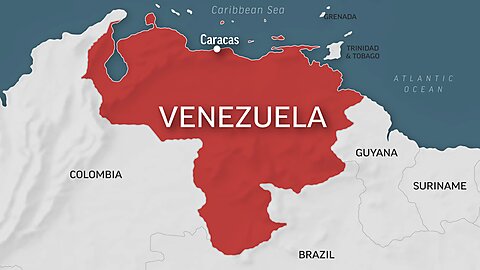
The Trump administration announced a major oil deal with Venezuela on Friday that would purportedly give the United States rights to 65 billion barrels of Venezuelan oil, or 20 percent of the country’s oil reserves. Much information and key details are still lacking, but everything we know about the deal is troubling:
It expands state corporatism by giving the US government a large, and possibly majority, stake in a major joint oil venture in Venezuela, an entity the Wall Street Journal reports “would be the world’s second-largest corporate holder of proven reserves after Saudi Aramco.” State-owned enterprises are a bad idea anywhere, but as Scott Lincicome observes, this comes after the US government under Trump has already taken equity in 31 private companies. As Scott says, “This isn’t even ‘creeping’ socialism anymore.”
The deal lacks transparency. The negotiation was conducted in secret, and, as Reuters reports, “The agreement did not pass through a competitive process,” so we don’t know how the United States’ private-sector partner or partners have been or are being selected. Moreover, details of what was actually agreed to are scarce, as a written agreement or contract has not been made public and may not even exist. This is consistent with the complete lack of transparency that has characterized the use of the billions of dollars in Venezuelan oil revenue in both countries that the Trump administration claims to be overseeing since it ousted dictator Nicolas Maduro in early January.
The deal lacks legitimacy since it was agreed to with a dictatorship that has clung to power for decades through violence and by committing what was probably the largest electoral fraud in Latin American history in 2024. The agreement was also reached under overwhelming pressure, military and otherwise, from the United States. As such, any future Venezuelan democracy will question the deal, thus undermining confidence in the current arrangement.
The legality of the deal is questionable. The authority and the legality of the US government’s announcement of a state-owned enterprise abroad and its commitment of government resources to it are unclear. For its part, Article 150 of the Venezuelan Constitution states that contracts of this kind with foreign governments must be approved by the National Assembly, which did not occur. In any event, the National Assembly currently in power also lacks legitimacy, so approval would not be able to overcome that problem.
The United States is conducting the deal with a dubious private partner. The business partner that Washington has reportedly picked for its joint oil venture is a company headed by Alejandro Betancourt, widely viewed by Venezuelans and internationally as notoriously corrupt. He has been the subject of corruption and money-laundering investigations in numerous countries, remains under investigation for money laundering in Switzerland, and has so far evaded conviction. In 2018, Transparencia Venezuela found that Betancourt’s company overbilled the Venezuelan government by $2.9 billion for building or modifying power plants. He is as reviled in Venezuela as the dictatorship with which he has gotten rich.
The deal sidelines the Venezuelan opposition and strengthens the dictatorship. The Venezuelan opposition played no role in the agreement, and it does not enjoy opposition or public support. On the contrary, there are credible indications that the deal is overwhelmingly unpopular and viewed as a betrayal of democracy. As a result, the United States is also losing the tremendous amount of goodwill that it had among Venezuelans. All of this increases the probability that any future democratic government will question or invalidate the agreement. As The Economist points out, this reality “raises the prospect that both the Trump administration and the Rodriguez regime might now share an incentive to prevent any elected government from taking office.”
The US-Venezuela oil deal is a gift to socialists all over the world who can now point to it with some credibility as an example of an imperial resource grab. But the deal flies in the face of economic freedom and the principle of voluntary exchange that made the United States prosperous, and it makes little strategic or economic sense. As some of us pointed out early on, the Trump administration could have achieved a Venezuelan oil sector completely open to US investment in a way that enjoyed widespread legitimacy by working with Maria Corina Machado, the leader of the opposition, on a democratic transition. It’s not too late for the United States to do so and achieve Venezuelan reforms that are far-reaching and durable.