
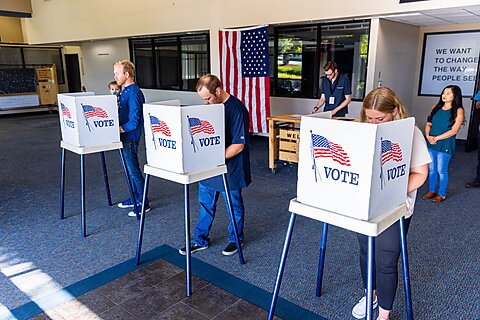
While you were busy attending to the earthquake at the national politics level, voters around the states were addressing civic matters on their initiative and referendum ballots. Some results on issues I previewed last month, plus a few others:
California voters rejected Proposition 40, which would have imposed a retroactive wealth tax, and instead approved Proposition 42, which bans both wealth taxes and retroactive taxes. Unfortunately, voters in Colorado narrowly approved a graduated income tax. Measures to limit income tax succeeded in North Carolina and Iowa but failed in Washington.
Efforts to build things in California will continue to be hobbled by the objector-friendly provisions of the notorious California Environmental Quality Act, or CEQA, after a partial rollback of the law failed.
Five states amended criminal justice laws to provide for more hard-line sentencing and bail policy. Colorado voters, however, turned down a proposal requiring more police cooperation with ICE.
Alaska’s pioneering reforms, combining a nonpartisan primary with a ranked-choice voting final round, as of this writing, seem to be narrowly surviving a repeal attempt. Massachusetts turned down “top two” nonpartisan primaries, otherwise known as jungle or California-style primaries, an arrangement that, as I wrote two years ago, has not lived up to many of its early hopes. As before, more states chose to constitutionalize existing statutory bans on noncitizen voting, and voter ID did well, although California and Arizona turned down versions of it (as always, the details are vital).
Expect bad ideas on labor union policy to assume greater national prominence soon. In the meantime, Vermont enacted a constitutional right to collective bargaining, which is likely to bind private employers in hard-to-predict new ways. Maryland enacted binding arbitration for state employees, a union priority.
Arkansas already had a right to keep and bear arms in its constitution; voters by a 71–29 margin expanded its scope to include rationales other than defense and to protect related goods such as ammunition and components.
Wisconsin approved, but Arizona rejected, measures to crack down on racial preferences, differently couched from each other. My home state of Maryland decided to free state legislators to gerrymander House districts to their tiny hearts’ content, but Missouri voters decisively rejected a gerrymander. Virginia will repeal its constitutional ban on same-sex marriage. Denver and Washington, DC, banned foie gras, Colorado won’t create a constitutional right to use natural gas, and Wisconsin narrowly voted not to create a constitutional right to assemble for worship during an epidemic.
Plus a few measures I missed last time:
Anti-speech: Proposal 2 in Michigan was presented as a measure regulating public utility companies and passed. But its provisions are drafted to restrict speech touching on candidates and ballot measures by thousands of other groups unrelated to utilities, including nonprofits and media.
Anti-speech squared: “Under Initiative 194, Montana would strip corporations, trade associations, labor unions, and nonprofits, including those headquartered elsewhere, of the legal power to spend money influencing elections in the state.” The constitutionality of this scheme under Citizens United remains to be seen, but proponents hope to roll it out in other states.
Tennessee voters made their state the thirteenth to adopt the package of crime victims’ rights known as Marsy’s Law, which I’ve criticized here, here, and here.
So it’s breakfast with Mom and Dad after all? North Dakota voters narrowly defeated a proposal to constitutionalize the provision of free breakfast and lunch in public schools.