
The Trump administration has initiated the federal purchase of stakes in 41 companies across numerous industries, including energy, minerals, drones, computing, and semiconductors. This is an aggressive and troubling foray into socialism, as Cato scholars are documenting in the Restoring Free Enterprise project.
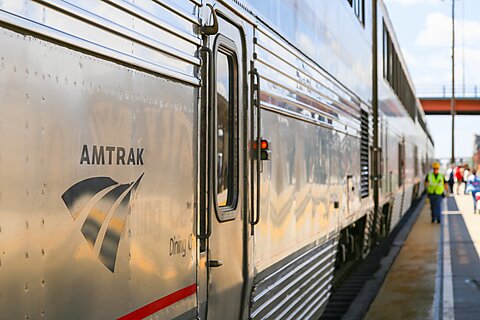
If extended, federal ownership of these firms will likely end in stagnation, inefficiency, and financial failure. Consider Amtrak. Congress created the passenger rail firm in 1970 expecting it to “become self-sufficient and operate as a private entity without subsidies within a few years.” But five decades later, government-owned Amtrak is as inefficient as ever and consumes vast subsidies, as I discuss in a new Cato study.
The Congressional Budget Office identified Amtrak’s biggest problem. Soon after the 1970 launch, it became “evident that Amtrak would be guided by politics as much as by business decisions.” Politics increase Amtrak’s costs and result in most Amtrak routes making little sense for the economy or the environment.
My new Cato study is not anti-rail. Indeed, it describes how governments battered railroads in the 20th century with costly taxes, regulations, and labor union rules. The government damage was a prelude to the 1970s federal takeover of the passenger rail system and parts of the freight rail system. For today, the lesson is that when industries are struggling, Congress should repeal costly government policies rather than pile on new subsidies and interventions.
While passenger rail became a ward of the state, policymakers went the opposite direction with freight rail. It was deregulated in 1980 and privatized in 1987. The reforms were a brilliant success, as freight rail productivity, safety, and profitability increased sharply in subsequent years. With freight rail, entrepreneurs and competition replaced political control and subsidies.
Congress should heed that lesson. It should privatize Amtrak and repeal federal control over routes, investments, and rail operations. Privatization would not automatically fix Amtrak’s failings, but it would allow entrepreneurs to innovate and improve efficiencies over time. To discover which rail services make sense for consumers and the economy, we should free passenger rail from the government.