
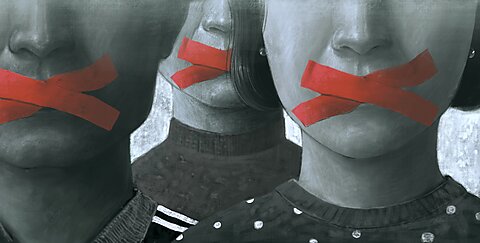
European Leaders Reject Free Speech; Americans Shouldn’t Follow Suit
Recently, both French President Emmanuel Macron and German Chancellor Friedrich Merz directly rejected the American notion of free speech.
Macron declared American free speech “the opposite of free speech.” In Macron’s view, free speech is free only if it is limited by “the freedom of others and respect for a common framework.” Macron went on to compare insults to physically striking others, citing the need for the government to stop both.
For his part, Merz frustratedly brushed off a question about anonymous informants and journalists by saying, “Please, nobody come to me with free speech. This has nothing more to do with free speech.” He derided free speech as a “libertarian” view from parts of the US that was incompatible with functioning liberal democracies.
It’s worth taking a moment to thank these European leaders for their honesty. For a long time, Europeans would respond to questions about free speech by saying that, of course, they have free speech, just with a few things off limits. These assertions often went unchallenged in polite company until Vice President JD Vance bluntly called out Europeans for their failings at the Munich Security Conference in 2025.
Since then, European leaders have become increasingly prickly about free speech. Spanish Prime Minister Pedro Sánchez said that platforms should be criminally liable for online speech and that online speech was a “Wild West” that the government must rein in. Merz has previously demanded an end to anonymous speech online, and Macron has dismissed social media companies’ free speech defense as “pure bullshit.”
European governments are using existing laws and authorities to increasingly police offline and online speech and are looking to pass new laws to regulate and restrict expression, ranging from social media bans to even more laws against what governments deem hate speech.
So the recent statements from Macron and Merz attacking free speech are best viewed not so much as a radical change as a forthright admission of the free speech recession already underway. Fundamentally, the European conception of free speech is one in which the government determines the bounds of speech. It may legislate and regulate with due process, following the pattern of liberal democracy, even as it strips away the core liberal value of individual rights and liberties.
And while these statements come from establishment parties and the tools of censorship have generally been used to target dissenting and nonmainstream viewpoints, it’s not entirely clear that these dissenters are robust defenders of free speech. For example, the Alternative for Germany, the German Greens, the French National Rally, and other smaller parties have used existing laws or called for new laws to silence speech. Political parties of all stripes certainly want free speech for their views, but frequently want to limit the expression of their opponents.
The problem is not confined to Europe, though. Even as Europe presses forward with more aggressive restrictions on free expression, many American policymakers are eager to join in. There have been repeated efforts by the FCC to pressure and punish broadcasters and attempts to deport noncitizen students for speech that the administration does not like regarding the conflict in Gaza. And there is bipartisan support among lawmakers for various state and federal bills that restrict speech, require age verification to access platforms or apps, or directly censor the use of AI tools for lawful speech.
Thankfully, the US conception of free speech is not bound by what any government thinks should be allowed. The First Amendment is as blunt as European politicians when it says that “Congress shall make no law … abridging the freedom of speech.”
The Supreme Court has set a high bar, then, for the types of speech that may be regulated, including true threats, imminent incitement to violence, and defamatory statements about public figures made with actual malice. The First Amendment leaves it to the American people to decide for themselves what they find laudable or hateful, what is true or false, and whom they listen to or whom they will shun.
But we must not merely rely on the law here. It is the American belief in liberty that keeps free speech alive in our policies and laws. European leaders may mean it derisively, but it is true that this staunch belief in individual liberty and free speech has been a distinctively American and libertarian one. As Americans, we should cherish our belief in free speech that has served Americans of all viewpoints in so many ways.
And that means taking a closer look at the expressive impact of our policymakers’ considerations. It is telling that many of the bills that seek to regulate online speech look an awful lot like the European approach. Before supporting bills targeting online speech that we think is harmful to kids, bad for society, or deleterious to democracy, we would do well to consider how many of these bills empower the government to determine the bounds of acceptable speech.
George Orwell once wrote that “if liberty means anything at all, it means the right to tell people what they do not want to hear.” Macron, Merz, and many other policymakers don’t want to hear what their critics have to say, because it is a barrier to their policies and power. “Macron and Merz have been honest about where the European approach leads; Americans should take them at their word and decline to follow.”